
The Therapist as Ethicist
On September 19, 2026, Enrico Gnaulati, Ph.D. led us in a thought-provoking discussion at this in-person breakfast event at NOOR Pasadena. The Therapist as Ethicist: What to Do When Professional and Humanistic Ethics Collide covered a host of ways in which psychotherapists are susceptible to compromising the quality of care offered to clients when they adhere to narrow definitions of professional ethics in the everyday world of clinical practice. A humanistic model of ethical care was mapped out along with case studies to enhance an appreciation of its practical benefits.

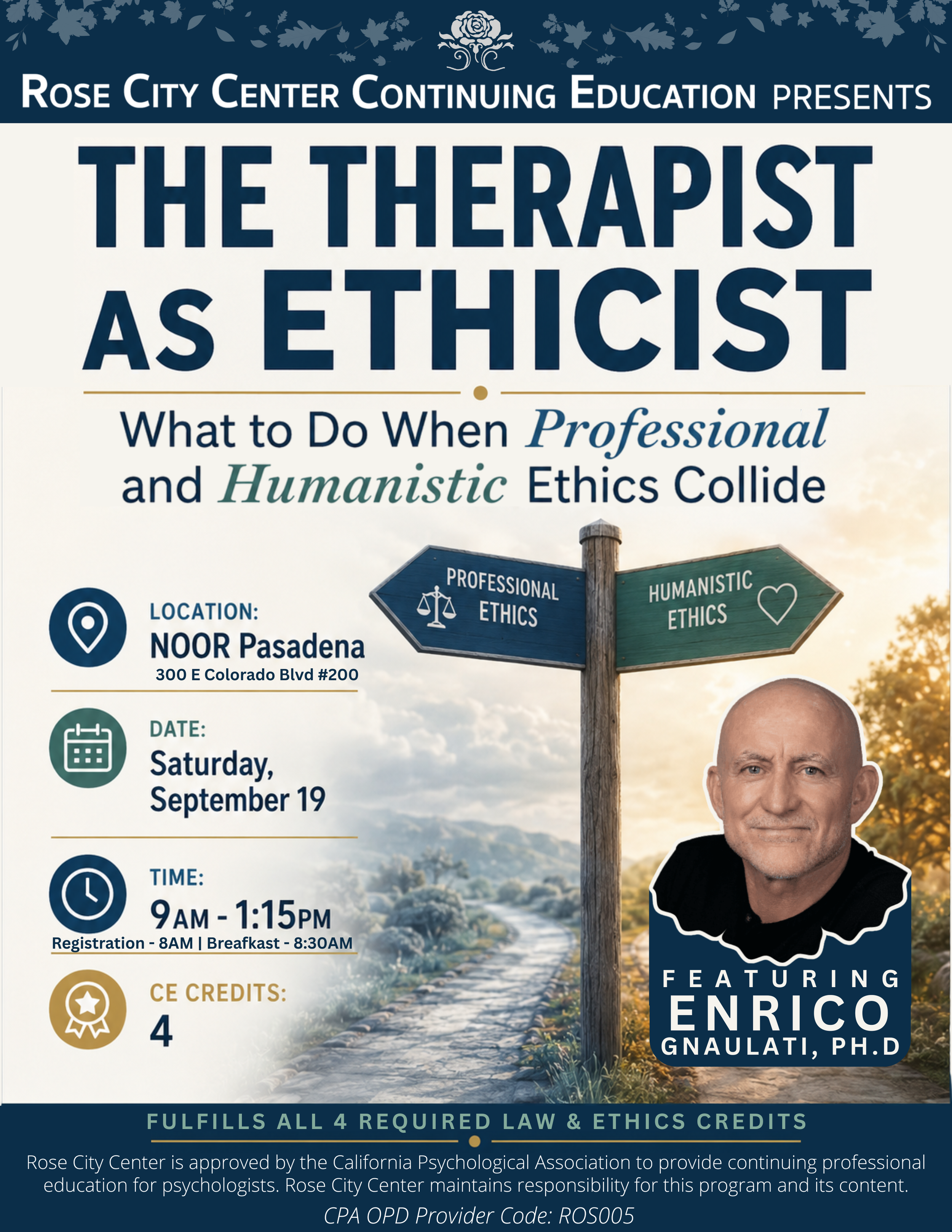
Headliner: Enrico Gnaulati, PhD
Enrico Gnaulati is a clinical psychologist & author with more than thirty years of experience providing psychotherapy to adults, couples, teens, children and families, as well as neuropsychological testing services and executive coaching.
A frequent contributor to national publications like The Atlantic, Salon, and The Huffington Post, Gnaulati is also sought-after public speaker and radio guest. He is a nationally-recognized reformer of mental health practice and policy, has published numerous articles in both academic journals and popular magazines, and is the author of multiple acclaimed books, including Flourishing Love: A Secular Guide to Lasting Intimate Relationships (Karnac Books, 2023); Saving Talk Therapy: How Health Insurers, Big Pharma, and Slanted Science are Ruining Good Mental Health Care (Beacon Press, 2018), and Back to Normal: Why Ordinary Childhood Behavior Is Mistaken for ADHD, Bipolar Disorder, and Autism Spectrum Disorder (Beacon Press, Sept. 2013). He is in private practice in Pasadena, California.


EDUCATIONAL OBJECTIVES: By the end of this CPA-OPD-approved event, participants will be able to:
Discuss four ways in which the enactment of traditional informed consent procedures can have alienating effects on clients, and how these procedures might be handled from a humanistic ethics standpoint.
Explain what metacompetencies are and why they are important aspects of clinical competency that psychotherapists have an ethical duty to maintain.
Describe how true multicultural competence requires awareness of how individualistic values can be different from the norms often adopted by clients from collectivist cultures and nondominant groups.
Define the concept of “moral injury” and the potential ethical obligation to treat psychological problems as moral injuries.
Rose City Center is approved by the California Psychological Association to provide continuing professional education for psychologists. Rose City Center maintains responsibility for this program and its content.
CPA OPD Provider Code R0S005